Hear Beyond Words – Supporting Deaf and Hard of Hearing People Across Everyday Situations is a resource kit dedicated to empowering social workers, psychologists, teachers, healthcare workers, and many other practitioners who support and work with Deaf and Hard of Hearing individuals.
This resource kit is designed to equip professionals with the knowledge, tools, and language needed to effectively understand and address the unique challenges that Deaf and Hard of Hearing people may face in everyday situations. My mission for this resource kit is to foster a greater understanding of Deafness, highlight the challenges and barriers that can come with it, enhance communication skills, and promote inclusivity through practical guidance.
The resource kit includes thoughtfully crafted everyday scenarios that address common issues encountered by Deaf and Hard of Hearing individuals. These scenarios are complemented by personal narratives, experiences, and practical insights that practitioners can use when supporting someone who is Deaf or Hard of Hearing.
I believe that informed practitioners can make a significant difference in the lives of the people they support. Having the right knowledge, understanding, and communication skills can help create more inclusive environments where Deaf and Hard of Hearing individuals feel heard, respected, and supported.
About
About me
Meet the passionate author of the Hear Beyond Words - Deaf Resource Kit: Mackenzie Davies.

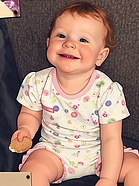
My name is Mackenzie Davies, and I have spent my whole life learning how to navigate a world that often wasn’t designed with Deaf and Hard of Hearing people in mind. Doctors had suspected that I started losing my hearing at the age of two. By the time I was four years old, I had virtually no hearing left, and yet, to this day, no one knows why I went deaf, and I don’t think anyone will ever know. There were no clear answers, no explanations, and no way to predict what my life would be like when I grew up.
I was a happy baby, but before my deafness was discovered, I
underwent five sets of grommet surgeries in both of my ears.
Everyone thought the grommets might fix the problem, but
that was certainly not the case. By the fifth surgery, my ENT
surgeon decided to give my cochlear and auditory nerve a
test, and there was no response from my cochlear, which
could only mean one thing: I was deaf. He told my parents to
take me to Hearing Australia and get my hearing tested again to get an official diagnosis.
I had already had so so many hearing tests over the years, and I knew what to do... I needed to PASS the hearing test! So, me being the amazing child that I was, I managed to fudge a pass to every single hearing test.
I was able to do this becuase over the years I had taught myself to tell when
the testing audiologist wanted me to recognise a sound. I would count their
breaths, monitor their eye movements, watch their hand movements, and
be able to predict when a sound was being played. I couldn't hear the sound,
but I was able to pass the test by predicting whent he sound would be played.
I thought that was what I was supposed to do. Until one day, a deaf
audiologist did the testing with me, and was able to see what I was doing.
I failed the hearing tests that day. The audiologist was able to distract me so
I could not read the person doing the testing...and it turned out that I was
profoundly Deaf. That day, my parents finally got some answers to questions
that had bothered them for years. There seemed to be a mix of relief and
sadness that settled in. They could finally understand why I was having
difficulties at school, personality and mood changes, and difficulty adjusting
to life in general. This was new for all of us. No one in my family was deaf or
knew exactly what to do next. There was a lot to be learned for me and my life,
but we all navigated it and adjusted to it together.
Shortly after the diagnosis of being profoundly deaf, I was fitted with
hearing aids. They did help, but just not enough for me to access what I
needed in life and the world around me. By the time I was 6 years old, I
underwent surgery to get my first cochlear implant. It was a difficult
procedure back then, and I needed to stay in the hospital for 2 days to
monitor how I was feeling, especially since I didn’t react too well to the
anesthetic.
A month later, once I was healed, I was switched on. I could finally hear; it was
amazing. It felt like I had been reborn. But, at the same time, it was one of the
most overwhelming experiences of my life. Everything was incredibly loud.
So loud it made mt eardrum rattle and made my head twitch, like someone
was using nails on a chalkboard. It was overstimulating and unfamiliar. The
sounds didn’t resemble what people would naturally hear - they sounded
robotic and strange; they did not sound acoustic. From what my parents have
told me, the first voice I heard that day was my older brother’s, which means
a lot to me, since he is one of my favourite people in this whole world.
It took around a year of rehabilitation, countless appointments, listening exercises, and determination before these robotic sounds turned into natural, acoustic hearing sounds. Eventually, I could understand speech and connect sounds to meaning.
Then, at the age of 8, I received my second cochlear implant. The rehabilitation process was much shorter than the first time, still hard, but it took half the amount of time the first time did; it took about 6 months. I had already understood what was to be expected when I was switched on, and my amazing brain had already learned how to adapt. It was such an amazing experience and feeling to finally understand what people were saying, and it was so cool to actually hear people more clearly. For the first time, I could experience a fuller picture of the world around me.
Cochlear implants did not erase the fact that I was deaf, and couldn’t hear anything
without them; it did not erase the challenges of being deaf, but it did make life so
much easier in so many ways. I didn’t know what was coming for me in the future -
many amazing experiences, yes, but also many tough and challenging times.
Growing up, there were many moments when I became painfully aware of how little
deaf awareness existed. School could be very draining and exhausting. I had to work
twice as hard as anyone else in the classrooms and conversations, and I felt like it
wasn’t fair, not because I was petty, but because it wasn’t fair. Shopping centres
were overwhelming, filled with background noise that made communication very
difficult. Even holidays brought their own challenges, especially in unfamiliar
environments where accessibility was not even remotely considered.
Making friends and fitting in could also be unnecessarily complicated. Thankfully, I have been super fortunate enough to have made many wonderful friendships throughout my life. I haven’t ever really had trouble making friends. However, there have been moments when I felt completely alone. As though no one understood what it was like to constantly adapt, lip-read, ask people to repeat themselves over and over again, or to pretend that I understood because I felt embarrassed and exhausted to ask again. After all,e to me, no one did understand, and to be fair, no one ever really did.
There have been times when people have rejected me because of my hearing impairment. Some people didn’t want me to be their friend, all because I was different. Others doubted my abilities in the workplace before even giving me a chance. Those experiences hurt. They affected my self-esteem and sometimes made me question my worth. There were moments when I wanted to give up. But I never did. Instead, I learnt resilience.
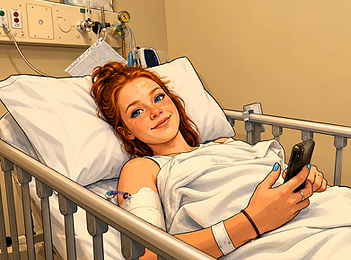
In Year 10, I faced another major obstacle. I had developed a staph
infection in one of my implant sites. It was serious. I had a permanent
intravenous line inserted into my heart so I could have ongoing
intravenous antibiotic treatment over 3 months. During this time I had
to complete much of Year 10 from home and from the hospital. Sadly,
after 3 months the treatment did not work, and we found out the inflection
had (dangerously) reached the actual implant site and the cochlear
implant, and urgent surgery was required to remove the inflection and
my impant immediately. Losing an implant after relying on it for so many
years was absolutely devastating. It felt like losing a part of myself and
taking a huige step back from the independence I had fought so hard
to gain.
Thankfully, three months later, I went for another surgery to get a brand new implant inserted. Once more, I faced the rehabilitation process, but like the second time, it was much shorter and halved in time. Even though the experience was shorter, it came with its own challenges. There were moments of frustration and exhaustion, but there was also hope. I had done it before, and I knew that I could do it again.
Being deaf has shaped who I am, but it does not define everything about me, and it never will. I will not let it. It has taught me patience, resiliency, determination, empathy, and most importantly, advocacy, not only for myself but for others who may not have a voice or are too scared to speak up. It has shown me that accessibility matters, awareness matters, and inclusion matters.
Growing up deaf in a hearing world hasn’t always been easy. There have
been barriers, misunderstandings, and moments of heartbreak. But there
have also been incredible friendships, supportive people, achievements
I am proud of, and experiences that have made me stronger than I
ever imagined.
I don’t know why I lost my hearing. Maybe I never will. What I do know is this: being dead has never stopped me from chasing my goals, finding my place in the world, or dreaming about the future I was to create.
My story isn’t one of limitation. It is one of perseverance, adaptation, and learning to hear beyond words. Being someone who has grown up being deaf, all of my life journeys and experiences have led to my Year 12 senior thesis project being what it is. A resource kit for social workers and practitioners supporting Deaf and Hard of Hearing individuals across everyday situations.